


Liberty Lives Here: Stories of Courage and Patriotism #9
Liberty Lives Here!
is a yearlong blog series celebrating 250 years of American liberty. Every two weeks, throughout 2026, we will be sharing stories of men and women whose lives helped shape the nation we call home. Some are well known. Others are easy to overlook. Each story invites us to slow down, look closely, and remember that liberty has always been built through faith, courage, and everyday faithfulness.
Abigail Adams
When people think about the American Revolution, they often picture battles, speeches, and the writing of important documents. But liberty was also protected in quieter places—in homes, in letters, and in the courage of those who kept families and ideals strong. One of my favorite people in the American story is Abigail Adams.
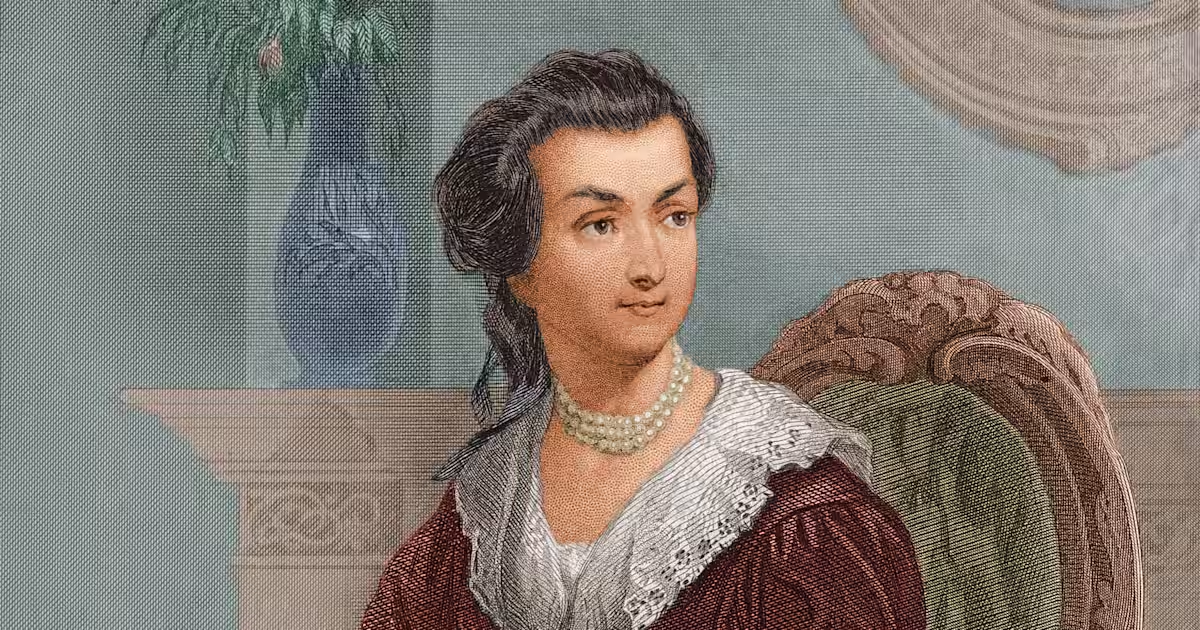
Abigail is known for that kind of courage.
Abigail was born in 1744 in Massachusetts. She grew up in a home where faith and learning were very important. Her father was a minister, and although Abigail did not receive a formal classroom education like many boys, she was taught at home. She read widely, studied history, and paid attention to the conversations happening around her. Over time, she developed a strong, thoughtful voice of her own.
As a young woman, she married John Adams, a lawyer who would become one of the leading voices for American independence. Their marriage was built on deep respect, shared values, and genuine friendship. They would spend many years apart while John traveled for his work in the Continental Congress and later as a diplomat, but they remained closely connected through their letters.
Those letters became one of Abigail’s most important contributions to the nation.
As tensions with Great Britain increased, Abigail took on the full responsibility of managing their home and farm in Braintree (now Quincy), Massachusetts. She oversaw planting and harvesting, handled finances, made decisions about the household, and raised their children—often without knowing when or if John would safely return. Supplies were scarce during the war, and everyday life required creativity and endurance.
Abigail did not simply endure these challenges—she rose to meet them with strength and wisdom.
She followed political events closely and understood the importance of the decisions being made. In her letters, she shared thoughtful observations and offered advice to John. He respected her insight and often sought her perspective. Their correspondence reveals a partnership built on trust and shared purpose.
In 1776, as leaders gathered to consider independence and draft the Declaration of Independence, Abigail wrote one of her most well-known letters. She urged John and the other leaders to “remember the ladies,” expressing her belief that the new nation should consider the rights and dignity of women.
During the war, Abigail lived close enough to the conflict to witness its effects. From her home, she could hear the distant sounds of battle. She watched troops move through the area and saw the strain that war placed on families and communities.
One of the most difficult challenges she faced was the threat of disease. Smallpox was a constant danger. Abigail made the courageous decision to have herself and her children inoculated—a risky process at the time, but one that could save their lives. She carefully documented the experience, showing both her concern and her determination to protect her family.
After the war, Abigail continued to support her husband as he served the new nation in Europe and later as vice president and president. When she joined him overseas, she observed foreign governments and societies firsthand, gaining a broader understanding of the world.
As First Lady, Abigail Adams brought intelligence, dignity, and steady leadership to her role. She supported her husband while also maintaining her own clear voice and convictions. She remained deeply committed to the values that had shaped her life.
Abigail homeschooled her children, including her son John Quincy Adams, who would later become president. She believed that knowledge helped people think clearly and act wisely. She also believed that character, honesty, discipline, and faith were essential for preserving liberty.
Throughout her life, Abigail remained grounded in her beliefs. She understood that liberty was not only something discussed in government buildings. It was something lived out each day—in how people treated one another, how families were raised, and how individuals chose to act when faced with difficulty.
Her letters remain one of the most important windows into the early years of the United States. Through them, we see a woman who was steady, thoughtful, and deeply committed to both her family and her country.
Abigail Adams preserved liberty in a place that has been often overlooked—the home. Her life reminds us that the strength of a nation begins with the strength of its people, lived out in everyday faithfulness behind the scenes.
From Miss Agatha Liberty…

Sometimes courage is staying faithful in the everyday work set before you, trusting that every small act of faithfulness helps protect something much bigger.

This interactive activity packet is designed to help families connect more deeply with the Liberty Lives Here blog series. Through hands-on activities, thoughtful discussion prompts, and creative learning, children explore the lives of Americans whose stories shaped our nation. Each packet encourages families to read together, talk together, and reflect on how faith, character, and everyday choices have played a lasting part in the story of American liberty.


